
Togami Electric Mfg. Co., Ltd.

Togami Electric Mfg. Co., Ltd.

PRODUCTS

  
Super Line Checler

TLC-C-Y1

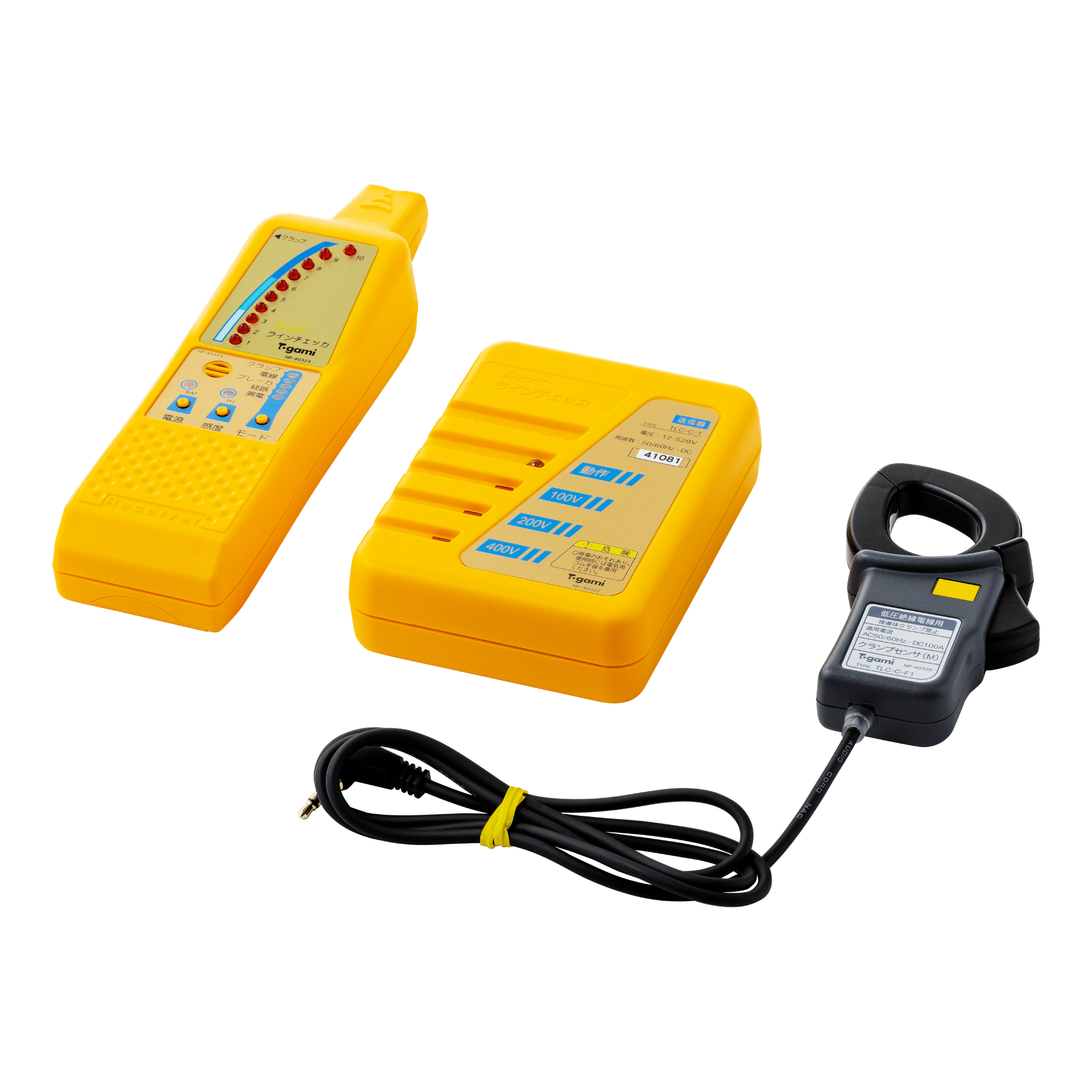
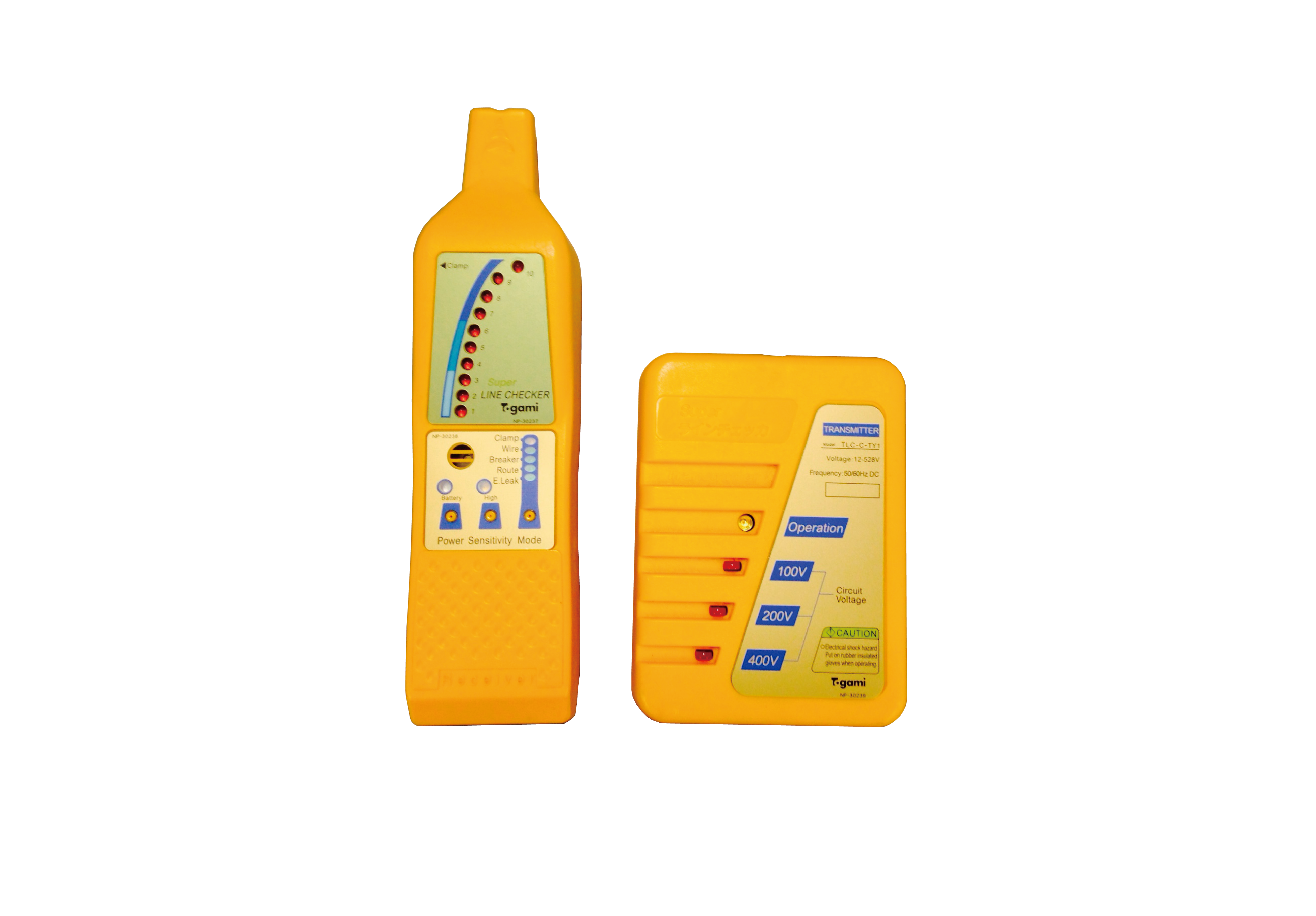
Super Line Checker

Super Line Checker is designed to streamline line checks by allowing breaker tracing without the need to shut off power (live line) with single-person operation. It's ideal for checking lines following faults or during maintenance before electrical equipment is modified.


Features

  • Allows one-person tracing of breakers and lines to reduce labor costs.
  • Allows breaker tracing on live lines, eliminating time constraints.
  • Includes as standard the clamp sensors required for more accurate tracing.
  • Supports a wide voltage range from 12 to 528 VAC/VDC, allowing use in all kinds of locations without unconstrained by site conditions.
  • Can be used for leakage point tracing on de-energized lines.
  • Provides both audible and visual indications for easy assessment.
  • An optional signal leakage prevention unit can be used to prevent signal leakage to lines other than those being checked.

Functions

    ・Breaker tracing (live/de-energized)

    ・Leakage point tracing (de-energized)

    ・Buried line tracing (live/de-energized)

    ・Cable tracing (de-energized)

    ・Circuit voltage checking (100 V/200 V/400 V)


Specifications

  Transmitter(Type:TLC-C-T)
         
  • Applicable voltage range
    12-528 VDC
    50/60 Hz and 12-528 VAC
  • Type
    Current consumption type
  • Signal frequency
    5 kHz
  • Signal current
    200 mAp
  • Signal time
    30 ms
  • Signal cycle
    500 ms
  • Operation indication
    LED(yellow)
  • Voltage indication
    LED(red)(100 V/200 V/400 V)
  • Dimensions
    112(H)×82(W)×30(D) mm
  • Weight
    Approx. 111 g
  •   
  Receiver(Type:TLC-C-R)
  • Detection mechanism
    Detection the magnetic field generated by the signal current
  • Detection frequency
    5 kHz
  • Built-in sensor
    Two coil sensors ( coils for wire detection and breaker detection )
  • External sensor
    Clamp sensor ( plug connecting type )
  • Judgment criterion
    10 LEDs ( red ) blink ( receiving level indication ) and alarm sound
  • Sensitivity selection
    Five-mode switching: Clamp, Wire, Breaker, Route, and E.Leakage
    All modes feature switchable sensitivity levels ( Low / High ) .
  • Applicable circuit conditions for leakage detection
    Ground fault resistance = 2 kΩ or less Earth capacitance = 0.01 μF or less
  • Power supply
    One 9 V battery ( manganese or alkaline )
  • Battery life
    Approx. 8 hours ( manganese battery, 20 ℃, continuous receive )
  • Battery life display
    T-LED ( blue ) ( Battery remaining : lighting = 40% or more, blinking = 40% or less, extinction = 0% )
  • Auto power off
    Power off after 10 minutes of no operation
  • Auto power off alarm sound
    1.5 sec ( ON ) → 5 sec ( OFF ) → 1.5 sec ( ON ) → 5 sec ( OFF ) → 5 sec ( ON ) → Power off
  • Applicable clamp sensor
    Clamp sensor(M)( internal diameter φ24)(standard)
    Clamp sensor(LL)( internal diameter φ68)(option)
    Clamp sensor(L)( internal diameter φ40)(option)
    Clamp sensor(S)( internal diameter φ8) (option)
  • Dimensions
    193(H)×51(W)×33(D) mm
  • Weight
    Approx. 135 g ( including a battery )
  •   
    

FAQ

01
How do I perform leakage point tracing?
Leakage point tracing is performed on de-energized lines on 100 V circuits with at least 50 mA (ground resistance of 2 kΩ or less). When an earth leakage breaker trips, a voltage remains on the power supply side, so if a signal is transmitted when a transmitter is connected to the same phase, this is the circuit in question. The leakage point can be identified by the audible and visual indications cleared when the load side of the circuit is traced with the receiver.
02
Does it generate any interference with low-voltage equipment?
We tested the product during development to confirm that it does not affect other equipment but cannot guarantee that no interference will occur. It is not possible to verify interactions with all of the equipment available worldwide. Nevertheless, the product has been used in a wide range of environments since its launch, and we have received no reports of malfunctions attributable to the tracer.
03
How do I perform de-energized line tracing?
For de-energized lines, use the two included 9 V batteries as a power source. Connect the transmitter to the conductive part to be traced and the ground terminal to form a loop, then trace using the receiver.
04
Can it be used to locate faults in solar panels?
We currently recommend the following as the PV Doctor series solar battery fault tracers:
 ① SPST-B/SPST-A1A String Tracer I-V characteristic measuring unit
  This measures I-V characteristics for up to four strings simultaneously, making it easy to assess individual string condition by comparison.
 ② SPLC-A Cell Line Checker faulty module locator
  This can be used to identify module fault or disconnect locations.
05
What’s the maximum tracing distance?
Tracing is possible up to a distance of 5 km from the transmitter to the receiver. The distance between the receiver and the wall is approximately 1 meter, but this depends on sensitivity and the wall material.
06
What’s the optional signal leakage prevention unit used for?
Normally, a 5 kHz signal is input by the transmitter on the load side and returned to the transmitter via upstream power transformers and lighting transformers. Connecting the signal leakage prevention unit will cause it to behave like a transformer, allowing clearer tracing. It’s used when there is excessive noise or sensitivity is low.
07
What are the differences between the current model (TLC-C) and previous models (TLC-B and TLC-A)?
Noise resistance has been improved. The sensor at the tip of the receiver has been made slimmer; it’s now possible to connect a clamp sensor for more reliable tracing. The current model is incompatible with previous models.
08
Is calibration necessary?
This product is not a measuring instrument, so no calibration is required. We do, however, provide repair services.
  

Usage

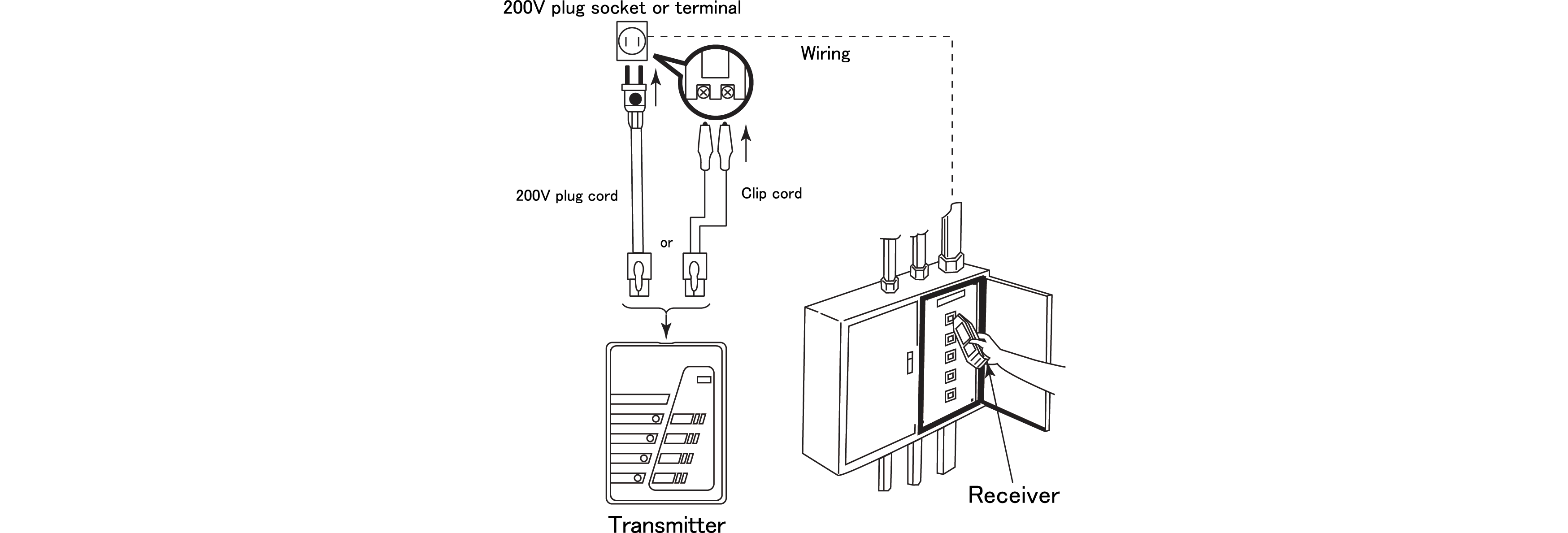
1.Breaker tracing (live)

Breaker tracing (live)

2.Leakage point tracing (de-energized)

  Leakage point tracing (de-energized)

3.Cable tracing (de-energized)

              Cable tracing (de-energized)

4.Circuit voltage checking (100 V/200 V/400 V)

Circuit voltage checking   
Product category
pagetop